Overview
My PhD supervision focuses on hybrid analysis & modeling, digital twins, physics-guided machine learning, corrective source term approaches, reduced order modeling, operator learning, and safe reinforcement learning. I welcome strong applicants with backgrounds in machine learning, control theory, computational fluid dynamics, or applied mathematics.
Research topics span from fundamental algorithm development to industrial applications in energy, maritime, built environment, and process industries.
Current PhD Students

NN
Developing hybrid modeling approaches for real-time condition monitoring and predictive maintenance of electrical cable networks. Focus on data assimilation, uncertainty quantification, and sensor fusion techniques.

Bjørnar Kaarevik
Combining physics-based models with machine learning for accurate pore pressure estimation in subsurface formations. Part of the BigPressure project (5 MNOK) focused on drilling safety and efficiency.

Oluwaleke Yusuf Umar
Investigating AI-driven approaches for autonomous mobility systems, including trajectory prediction, path planning, and multi-agent coordination in urban environments.

Mehmet Altindal
Developing real-time monitoring and predictive models for hole cleaning operations in drilling. Using sensor data, hybrid modeling, and digital twin frameworks for improved operational efficiency.

Alberto Mino
Research on interpretable machine learning methods for industrial applications. Focus on developing XAI frameworks that balance model performance with transparency for safety-critical systems.
Completed PhD Theses

Mohammed Ayalew Belay
Supervisors: Pierluigi Salvo Rossi (Main), Adil Rasheed (co-supervisor)
Project: Digital Twin Anomaly Detection
Developed unsupervised anomaly detection methods for digital twin applications, including clustering, autoencoders, and novelty detection techniques. Research focused on real-time anomaly identification without labeled data for complex industrial systems.
Research Highlights

Unsupervised learning algorithms for anomalies
Autoencoder-based detection framework
Clustering methods for pattern discovery
Digital twin integration architecture
Real-time detection deployment

Wanwan Zhang
Supervisors: Jørn Vatn (Main), Adil Rasheed (co-supervisor)
Project: Intelligent Maintenance Systems
Research on predictive maintenance frameworks, decision support systems, and ML-driven operational optimization for industrial assets. Developed algorithms for remaining useful life prediction and optimal maintenance scheduling under uncertainty.
Research Highlights
Predictive maintenance framework design
Decision support system development
Remaining useful life prediction models
Maintenance scheduling optimization
ML-driven operational strategies

Supervisors: Main: Adil Rasheed, Co-sup: Trond Kvamsdal, Kjetil Andre Johannessen, Omer San
Project: Wind Energy Digital Twins
Developed enabling technologies for digital twin frameworks in wind energy applications. Focus on reduced order modeling, data assimilation, and real-time prediction capabilities for wind farm optimization and control.
Research Highlights
Reduced order models for wind turbines
Data assimilation framework
Real-time prediction system
Wind farm digital twin architecture
Operational optimization strategies

Supervisors: Main: Adil Rasheed, Co-sup: Damiano Varagnolo
Project: Safe RL for Autonomous Systems
Developed safe reinforcement learning frameworks for autonomous systems operating under resource constraints. Introduced predictive safety filters and constraint-aware policy optimization methods. Published in leading AI and robotics journals.
Research Highlights
Predictive safety filter framework
Constraint-aware policy optimization
Resource-constrained RL algorithms
Safety verification methods
Real-world deployment case studies

Supervisors: Main: Adil Rasheed, Co-sup: Anastasios Lekkas, Edmund Brekke
Project: Digital Twin for Autonomous Vessels
Created a comprehensive digital twin framework for autonomous surface vessels, integrating sensor fusion, state estimation, and model predictive control. Demonstrated real-time situational awareness capabilities and adaptive control strategies.
Research Highlights

Digital twin architecture for the maritime domain
Real-time predictive condition monitoring using high dimensional data: Fully interpretable method
RSafe reinforcement learning: Can enable safe training of RL agent in the realworld
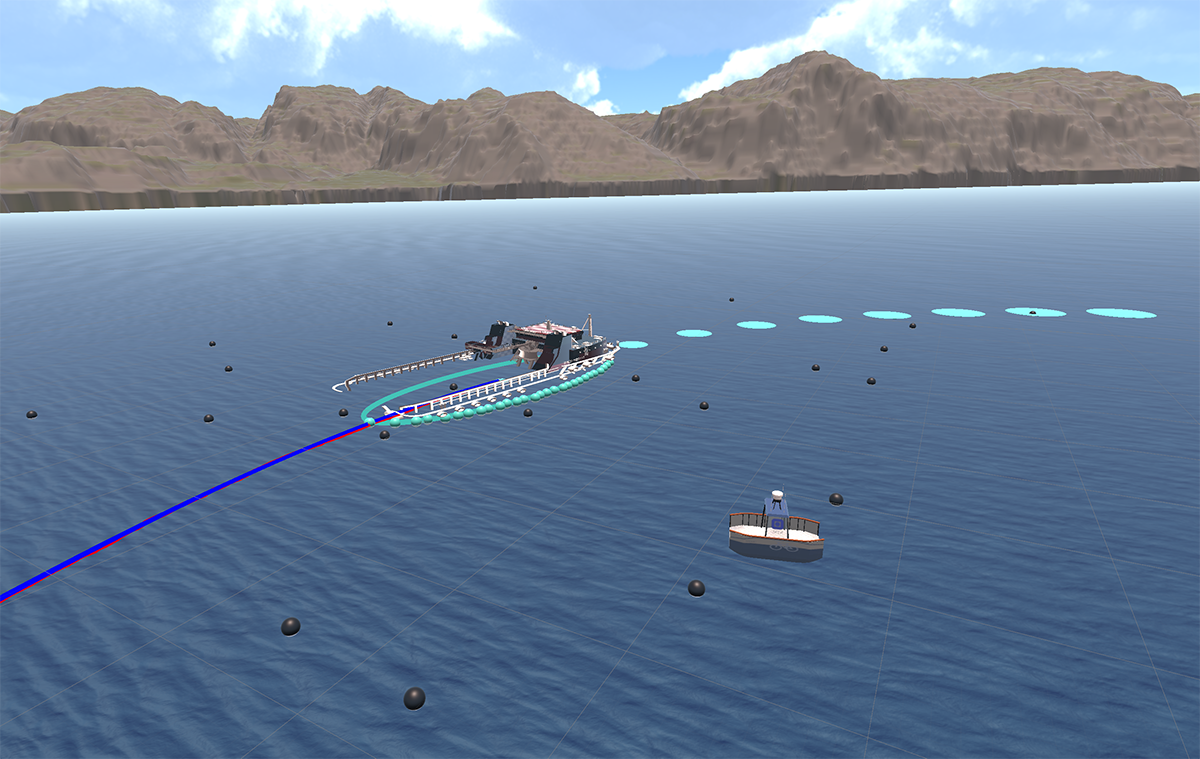
Fusion of AIS and LEDAR data for multitarget tracking
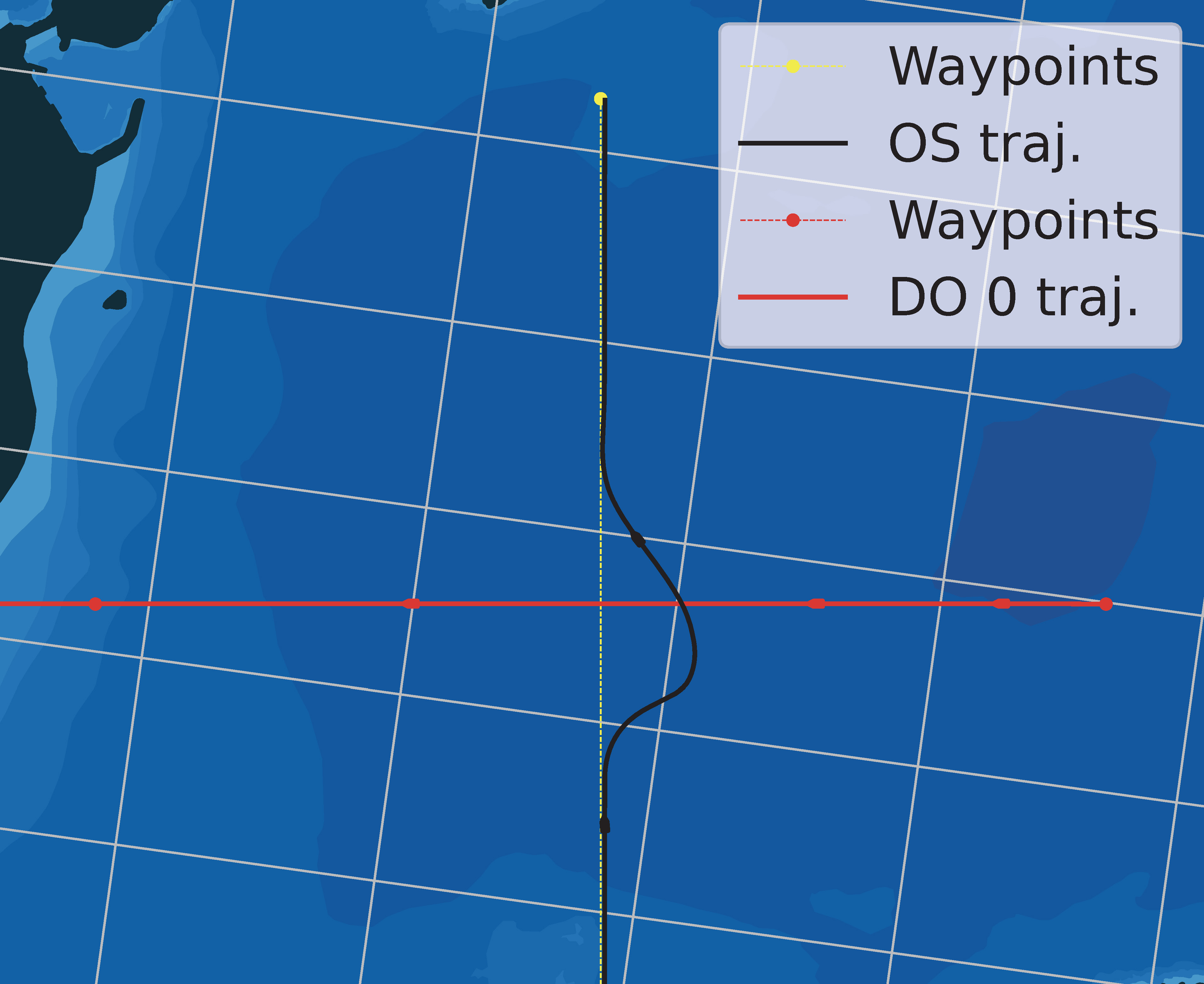
Digital Twin Assurance: Keep the digital and the physical asset in sync.

Abdallah Alshantti
2024Supervisors: Main: Frank Wetad, Co-sup: Adil Rasheed, Damiano Varagnolo
Project: ML for Financial Crime Detection
Applied ML methods for financial crime detection, fraud prevention, and risk assessment. Developed novel approaches for imbalanced datasets and explainable models in regulatory contexts. Co-supervised research with industry partners.
Research Highlights
Financial crime detection algorithms
Imbalanced data handling techniques
Explainable AI for compliance
Fraud prevention models
Risk assessment framework

Supervisors: Main: Adil Rasheed, Co-sup: Damiano Varagnolo
Project: Trustworthy ML for Control Systems
Research on trustworthy ML methods for control systems, including verification, robustness analysis, and safety guarantees for neural network controllers. Developed piecewise affine representations for neural network verification.
Research Highlights
Neural network verification methods
Piecewise affine representations
Robustness analysis framework
Safety guarantee mechanisms
Controller certification tools

Supervisors: Main: Jan Tommy Gravdahl, Co-sup: Adil Rasheed, Ivar
Project: Data-Driven Dynamical Modeling
Developed data-driven methods for dynamical system identification under limited data scenarios. Introduced transfer learning and physics-informed approaches to overcome data scarcity in system modeling.
Research Highlights
Data-limited system identification
Transfer learning for dynamics
Physics-informed modeling approaches
Sparse data techniques
Model validation under uncertainty
Supervisors: Main supervisor TBD, Adil Rasheed (co-supervisor)
Project: Turbulence Modeling for Bridge Design
Research on turbulence modeling in complex terrain for bridge engineering. Combined field measurements with CFD simulations for wind load assessment in fjord environments.
Research Highlights
Turbulence characterization methods
CFD simulations for complex terrain
Field measurement campaigns
Wind load assessment framework
Bridge design recommendations

Supervisors: Main supervisor TBD, Adil Rasheed (co-supervisor)
Project: Ship Performance Monitoring
Created frameworks for ship performance monitoring using onboard sensor data and big data analytics. Developed performance benchmarking and optimization recommendations for maritime operations.
Research Highlights
Ship performance monitoring system
Big data analytics framework
Performance benchmarking methods
Optimization recommendations
In-service measurement integration

Supervisors: Main supervisor TBD, Adil Rasheed (co-supervisor)
Project: Wind Turbine ROM Development
Developed high-fidelity CFD models for wind turbine simulations and created reduced order models for real-time prediction. Pioneered ROM techniques for wind farm optimization and control strategies.
Research Highlights
High-fidelity CFD simulations
Reduced order modeling framework
Real-time prediction capabilities
Wind farm optimization techniques
Control strategy development
PhD Co-supervision
Co-supervised PhD research in applied machine learning and data analytics.
Co-supervised PhD research in computational methods and modeling.
Industry PhD focused on applied data science and process optimization in industrial settings.
Co-supervised PhD research in computational modeling and simulation.
Research on multi-agent RL systems, coordination strategies, and distributed decision-making frameworks.
Research on large-scale data analytics, cybernetics principles, and systems modeling for complex socio-technical systems.
Research on big data methods, feedback systems, and adaptive control for large-scale systems.
Research on biofeedback systems, physiological signal processing, and human-machine interaction.